Blog/Hurricane Tree Prep for Coastal Georgia: Before, During & After the Storm
Hurricane Tree Prep for Coastal Georgia: Before, During & After the Storm
Coastal Georgia gets named storms most years. Some pass quietly, some flatten neighborhoods. The difference between "tree on house" and "tree narrowly missed the house" is usually decided weeks or months before the storm — by what you did, or didn't do, during the calm months.
This guide covers the three phases: before the storm (the pre-season prep that actually matters), during the storm (what to do if a tree comes down), and after the storm (how to deal with cleanup without getting taken advantage of by storm-chasers). Specific to Effingham, Chatham, and Bryan County, GA.
Before the storm: the prep work that actually matters
Most homeowners think hurricane tree prep starts when there's a named storm in the Atlantic. By then, it's mostly too late — reputable tree services are booked for weeks. The right window is April to early June, before peak hurricane season.
1. Walk your property and identify the riskiest trees
Coastal Georgia trees fail in predictable patterns during hurricanes. The ones most likely to come down:
- Loblolly and longleaf pines. Shallow root systems, tall and top-heavy, the most common "tree on house" call we get during named storms. If you have a mature pine within falling distance of your house, it's the first one to look at.
- Water oaks past 50–60 years old. Internal rot is common in older water oaks, and the canopy is heavy. They split or drop major limbs in sustained wind.
- Anything already leaning or with visible damage. See our guide to dangerous tree signs for what to look for. A tree showing warning signs in May will likely fail in September.
- Dead or dying trees of any species. Dead wood fails first and unpredictably. Even smaller dead trees can do significant damage to roofs and cars.
- Pecans with heavy nut loads. Pecan wood is brittle, and a heavy nut year combined with hurricane wind drops major limbs.
2. Decide which to remove, trim, or leave alone
The decision tree most homeowners should run:
- Dead tree near the house → remove it. Dead trees don't come back, and they fail in the next storm. The cost is almost always lower than the deductible on the structural damage they cause.
- Leaning tree near the house with new signs of root movement → remove it. Don't wait.
- Large pine within drop distance of the house → get it inspected. If it's healthy and well-rooted, a thinning trim (crown reduction, deadwood removal) may be all it needs. If there's rot or root issues, remove it.
- Healthy oak with deadwood in the crown → trim out the deadwood. The tree itself is fine; the falling deadwood is what does the damage.
- Tree far from any structure → leave it. Healthy trees with no failure signs and no fall zone on your house are fine.
3. Schedule the work in spring, not June
Hurricane season runs June 1 through November 30. Reputable tree services book up fast once forecasts start mentioning the season — which can be as early as April. If you can get the scheduling done in March or April, you'll have a much better time of it than the homeowner calling in mid-August when there's a system in the Gulf.
4. Inside-the-house prep that ties into tree prep
Once you know which trees are coming out and which are staying, plan for what could still happen:
- Move outdoor furniture, grills, planters, and anything else that could become a projectile.
- Take photos of major trees on your property. If one comes down during the storm, before-and-after photos help insurance claims.
- Know where your gas, water, and electric shutoffs are. If a tree breaches the roof, you may need to use them.
- Have a tree-service contact saved. After the storm is not when you want to start vetting companies.
During the storm: what to do if a tree comes down
First and most important: stay inside until the storm has fully passed. Most post-storm injuries happen during the cleanup, not the storm itself. Branches keep falling for hours after the wind drops. Wait for daylight if it's still dark.
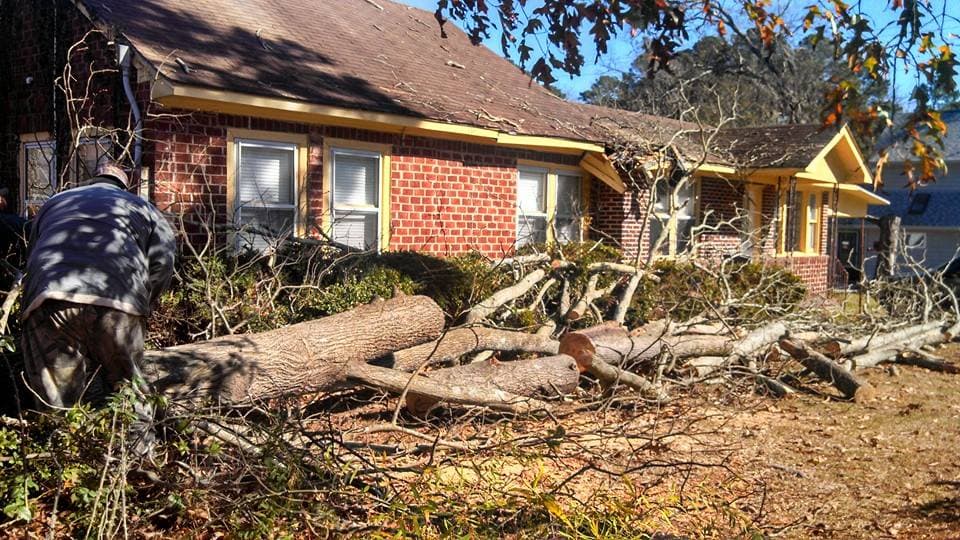
If a tree hits your house
- Get everyone to the safest interior space. Bathrooms, interior closets, hallways — rooms with no exterior walls. Stay there until the storm passes.
- Call 911 if anyone is hurt or trapped. Don't wait to assess; emergency responders will route around downed power lines and blocked roads.
- If you smell gas, leave the house immediately. A tree on the roof can break gas lines inside the wall.
- Avoid the damaged area. Trees on houses can still shift, even after they've come to rest. The structure underneath may be compromised in ways you can't see.
- Don't go near downed power lines. Assume any line on the ground is energized until your utility confirms otherwise. Tree limbs touching lines can conduct electricity.
Document everything, but only when safe
When the storm has fully passed and conditions are safe, take photos and video before anything is moved. Insurance adjusters will want:
- The fallen tree from multiple angles
- Damage to the structure (roof, walls, interior)
- Any damaged personal property
- Wide shots showing the position of the tree relative to the house
Photograph it before you call a tree service. Once we're on site, things move fast.
After the storm: cleanup without getting scammed
The day after every hurricane is when out-of-state "storm chasers" show up. They knock doors offering cash deals, sometimes with very high pressure. Some are legitimate. Most are not. Three rules that protect you:
1. Verify insurance before anyone touches your property
Any legitimate tree service can produce a certificate of insurance (COI) listing general liability and workers' compensation. Ask for it. A real COI lists the insured's name, the policy numbers, the coverage limits, and the policy expiration dates. If they can't produce one, walk away.
Why this matters: if an uninsured worker gets hurt on your property, you may be on the hook. If they damage your house removing the tree that already damaged your house, you may have no recourse.
2. Get the agreement in writing before work starts
After a major storm, verbal agreements turn into "you said $1,500" vs "I said $5,000." Get it on paper. A short written estimate that lists the scope, the price, and whether cleanup is included is enough. Sign and date it. So do they.
3. Don't pay in full upfront
A common scam: cash up front, then no-show or partial-job. Legitimate tree services don't need full payment before the work is done. We don't take a deposit at all for normal residential jobs — you pay when you're satisfied. Larger commercial jobs sometimes warrant a deposit, but never the full amount.
4. Watch for out-of-state license plates
Storm chasers follow named storms across the Southeast. There's nothing inherently wrong with out-of-state crews — some come to legitimately help — but the bad actors are almost always out-of-state, gone by the time you realize the work was bad. Local crews like us live here, work here, and will still be here next month if there's an issue.
Insurance claims: a quick primer
This is general information, not legal advice. Always check your specific policy.
- Tree falls on covered structure (house, garage, fence): Usually covered, up to policy limits. Tree removal is often included up to a cap (commonly $500–$1,000).
- Tree falls in yard, no structural damage: Usually NOT covered. You're responsible for cleanup costs.
- Tree falls on car: Covered under comprehensive auto, not homeowners.
- Tree on neighbor's property fell on yours: Generally still YOUR claim, on YOUR insurance — unless the neighbor was negligently maintaining the tree (e.g., you put them on notice that it was dangerous and they did nothing).
Document everything, file the claim quickly, and don't agree to any settlement before you know the full scope of damage. Hidden water intrusion often shows up days after the storm.
What we do during hurricane season
Our normal scheduling shifts during named storms:
- Before landfall: We honor existing appointments when possible but prioritize getting our own equipment and crew ready. New non-emergency requests usually get pushed.
- Storm aftermath: All resources go to emergency tree-on-structure, blocked-access, and hazardous-lean calls across Effingham, Chatham, and Bryan County. We don't take cash up front, don't pressure-sell, and don't price-gouge.
- Existing customers get priority. Years of word-of-mouth means we know a lot of the houses we'll be rolling to before we get the call.
Our emergency line is 912-631-3987. Steve answers most calls personally during storm response. We treat trees on structures, blocked driveways, and hazardous leans as same-day or next-day priority across the metro.
Quick reference checklists
Spring (April–May)
- Walk the property — note every tree within fall distance of structures
- Identify dead trees, leaning trees, and trees with visible signs of decline
- Schedule removal or trim work for the at-risk ones
- Save a local tree-service number to your phone
When a named storm forms
- Move outdoor objects inside or secure them
- Take photos of major trees on the property
- Charge phones, check flashlights, gas up the car
- Know where your gas/water/electric shutoffs are
After the storm
- Stay inside until the storm has fully passed
- Assume any downed wire is energized — stay away
- Document damage before any cleanup starts
- Verify insurance and get a written agreement before work begins
- File the insurance claim quickly
Want a pre-season walk of your property? Send the address and we'll come out for a free assessment. The best time to deal with hurricane tree prep is months before the first storm name shows up on a forecast.
Need a hand?
Free estimate — same day.
45 years of saw work across Effingham, Savannah, and Bryan County. Call Steve directly, or send a quick form and we'll get back today.
Keep reading
How to Tell If a Tree Is Dangerous: A Coastal Georgia Homeowner's Guide
The honest signs that a tree on your property could come down — what to look for, what to do about it, and when to call a professional. From 45 years of reading trees across Effingham, Savannah, and Bryan County.
Stump Grinding vs Stump Removal: What's the Difference and Which One Do You Actually Need?
Most homeowners hear both terms and assume they're the same thing — they're not. Here's how stump grinding works, when full stump removal is worth it, what each one costs in coastal Georgia, and the right call for your yard.
Tree Removal Cost in Savannah, Effingham & Bryan County — 2026 Homeowner's Guide
How much does it actually cost to take a tree down in coastal Georgia? What drives the price up, what brings it down, and the typical price ranges for the most common Savannah-area tree removals — from a 45-year saw operation.